Leaving the UK
A few years after the long incident involving beating saucepans in streets, putting genital mutilation flags in windows and performing kowtow rituals, I wanted to check in on the UK but I found no easy way to rent a property from overseas. I had one remaining contact in the form of a lesbian woman of around my age whose second bedroom I had rented for six months a few years prior. I contacted her, paid what she still called a “bond” and shipped my things there to arrive as I did.
On the previous instance, we ran into early difficulties as she didn’t want me to use the address for any official purposes. When I told her I was leaving but that was the only reason, she had something of a breakdown during which she accused me of threatening her by flaring my nostrils. She quickly apologised, but for a few days I recorded audio any time she was in my presence, before leaving with an invitation to pop in for tea at my new rental when it suited her.
Entering an empty house
In the interim, she had never contacted me and as I would arrive late in the evening, she said the front door would be left unlocked. There had been a four-foot pink unicorn by way of decoration that was no longer there, some new pictures of topless women had been added, but mainly I was astonished at how filthy everything was. It hadn’t been cleaned for six months or a year, the depth of dirt on the surfaces was very unpleasant. I went to the bedroom and the mattress was nauseating. There was a psychedelic wall hanging covering one wall that I removed, otherwise my options were limited.
The house was in such an advanced state of decay that it really ought to have been demolished years prior. She claimed to rent it from an old lady, but my guess is that she owned it and used that as an excuse for the lack of maintenance. The mould on the walls was so advanced her neighbours were inevitably affected. I assumed the whole street was in a similar condition.
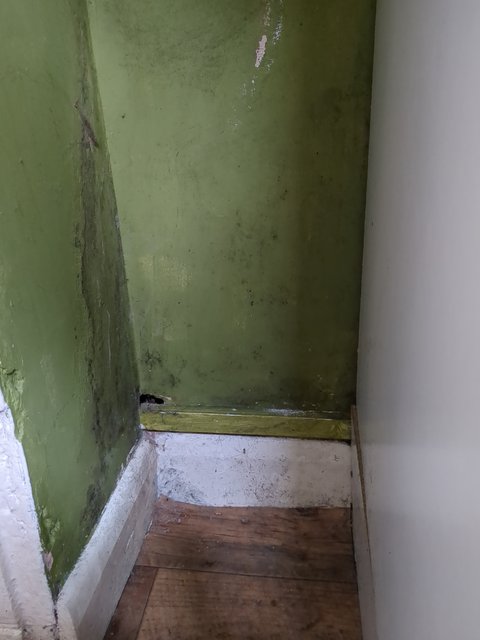
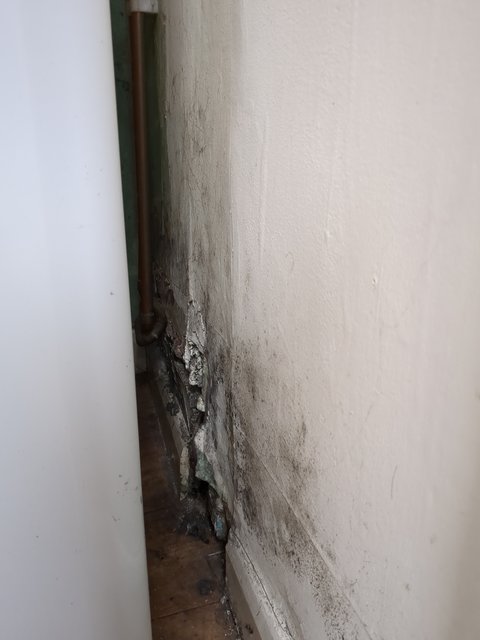
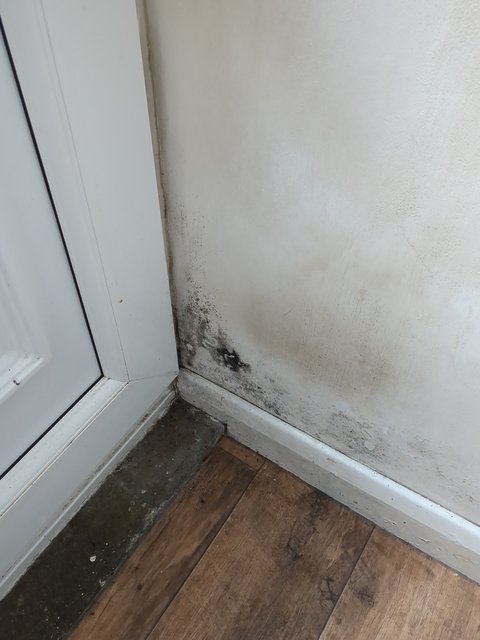
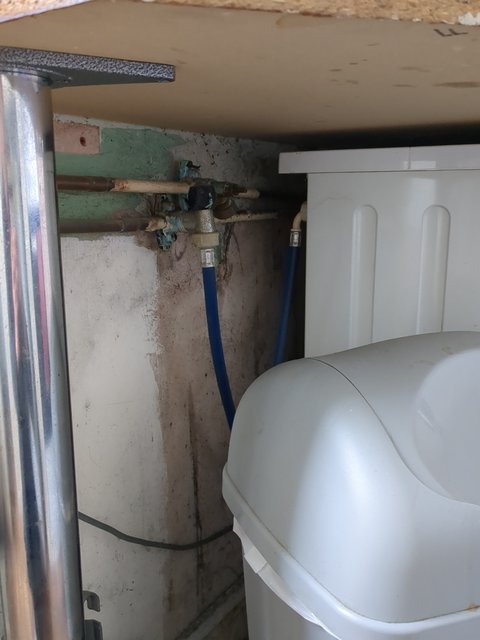
The house had no shower as there wasn’t enough pressure and as the electricity and other utilities would regularly be disconnected due to non-payment, I would be faced with a cold bath by way of hygiene.
My first priority was to obtain a British passport, as logging into HMRC’s platform had become unreliable and I could foresee problems with which my Irish passport would be no help. They refused my application, the grounds are not released. I tried to rent a house, but an African woman working in London at a referencing agency named Oh Goodlord! decided I couldn’t afford anything.
Helen Neill didn’t know her father and had moved ten minutes away from her chronically alcoholic mother and her three sisters and brother in Malton. The mother had become an alcoholic while working as a cleaner in a bar, was known for urinating in public around Malton, and had lived in emergency accommodation with the daughters on several occasions following violence involving various boyfriends. The grandparents had been a typical middle-class family post-WWII in the city in York.
The first time I’d lived there, Helen was supplying cannabis, and she hinted that her younger sister’s husband had spent time in Morocco and was involved in the supply, which I think was intended as some kind of intimidation. He worked in construction, and spent a lot of money financing vehicles and the family home and cocaine. But when I returned, it seemed Helen was only a client and cocaine was the sole focus of attention in the area.
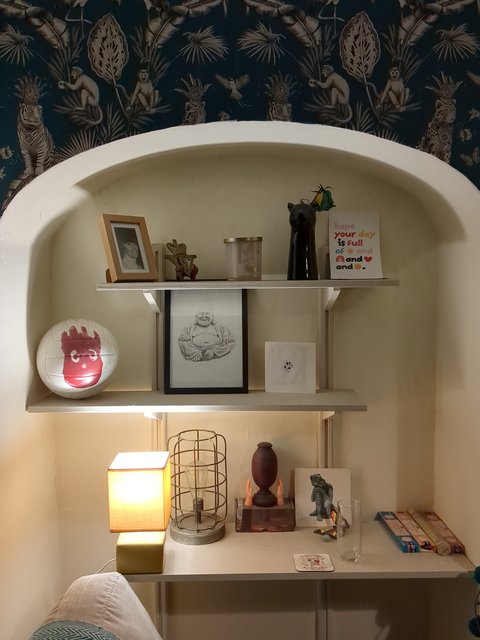
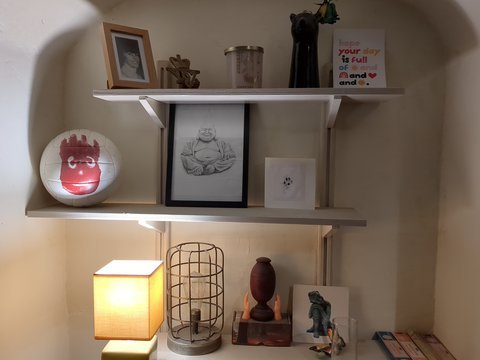
The two cats who lived there previously had disappeared, replaced by a single urn kept on a shelf above the only other chair apart from the sofa Helen used. She said the urn belonged to one of the cats when I asked about it after a few months, but she didn’t mention the other. The urn was surrounded by two small hands raised as though in prayer, but Helen was contemptuous of religion and, like many women in the area, more interested in witchcraft. Her bookshelf, collected from a box of free books at the end of the street, suggested only an interest in anatomy.

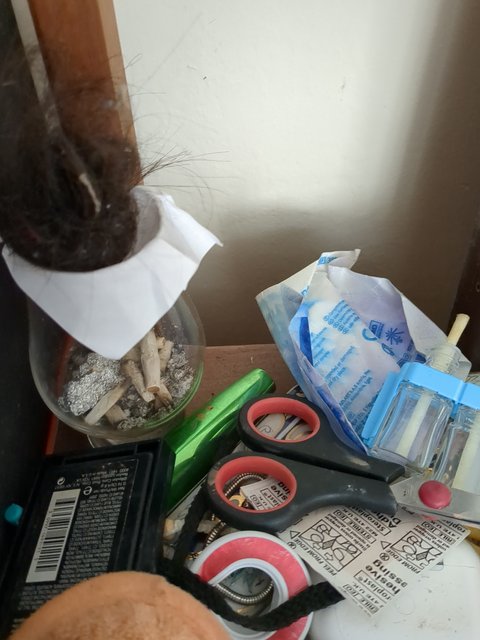
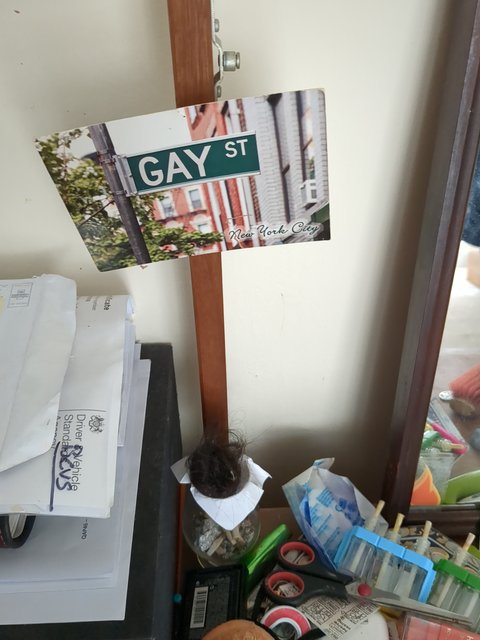
There are still a few factories in Driffield which provide mostly minimum-wage employment in the area but overtime too and security of employment. Helen would wake up around 5am in the morning and work until around 4. She would arrive home with a raging flourish, storm in and march across the room in an exaggeratedly masculine fashion and complain about her colleagues not being intelligent enough or reliable. Sometimes she would just stare at me with barely disguised hatred. She had a meat cleaver and several chef’s knives from her days in a kitchen, with which she would pace around frantically. She would cook the cheapest frozen pizza and either watch Anthony Bourdain episodes on Netflix, a habit continued from my previous time there, in that state of slack-jawed hypnosis so common in England and so chilling, or disappear into her bedroom immediately, sometimes for days. She could not hold a conversation on any topic beyond her immediate concerns.
She had one friend who would visit for several hours a few days per week, a quiet man who was taking anti-psychotics and wasn’t capable of conversation either. They would sit in silence and watch videos, mostly of his choice. He was her only friend, but one more than I had. My social graph is one node and zero edges.
Exceptional intimacy
I had previously gathered my thoughts on her lifestyle choices in a 4chan thread, and was curious about the possibility of inadvertent conversion therapy, but of course I didn’t return for that reason. Nevertheless, she would cyclically be pleasant and interrupt my workouts to discuss my body and give me advice based on her experience, and otherwise steer the conversation towards intimate topics, before relapsing into a cold silence more aligned with her avowed hatred of so-called bisexual people, a category she refused to consider as real.
She began to spend most evenings with a man from work, and one night they returned from the pub together drunk on a mission to fix the plumbing. Nothing was fixed and he quickly found another woman, whose face he had tattooed onto his upper arm after a few weeks together. A woman with short hair ran a ‘boutique’ in the town and Helen, via social media, persuaded her to join her for drinks one evening in Wetherspoons.
They came back to the house together drunk but stayed downstairs and at no point attempted to go to her bedroom. I woke up feeling sick. I have rarely felt such a sense of revulsion as they made the most unconvincing noises while I resisted the need to go down to the bathroom. Eventually, Helen ran upstairs to fetch something and returned and at some point I fell asleep. The next morning when I went downstairs, there was sticky alcohol everywhere, a black strap-on dildo on the chair on which I would have sat to eat breakfast and she later told me the woman had been pressuring her to take things into my bedroom.
The woman was married and had two children. She was living with her second husband, who she immediately demanded accept Helen into their lives. He didn’t agree, a fight broke out during a drunken afternoon in their house at which I wasn’t present, but by her account the woman pushed her husband down the stairs before he left on his motorcycle after the husband had tried to punch Helen. Helen was nevertheless unsatisfied and the woman was henceforth an enemy.
On that day, she had another breakdown of sorts and cried for hours. I think the emotion of a rare intimacy of sorts had a deep effect but later I understood the extent to which cocaine and perhaps crack also underpinned these events.
Elderly care
Her mother was losing weight quickly and Helen thought she was dying and needed to be detoxified in a hospital. Her elder sister, Christine, worked in elderly care and lived with the mother, preferring to continue to buy her vodka and live in peace. Christine had experienced the worst of the pandemic in her work and was now an authority on this kind of situation.
Soon after I arrived, she had invited Christine to stay and informed me that I should take her for lunch in Wetherspoons. I did so, and the conversation was awkward, but she talked about the cocaine parties paid for by covid loans, how her syphilis was no longer contagious and how the only thing she regretted not doing was getting married. Helen would later tell me that two of her former boyfriends had died by suicide. As I showed no further interest in Christine, she quickly found another gentleman with whom she would spend time in rural East Yorkshire caravans, taking large amounts of cocaine and her daughter, who sold cocaine in Scarborough, along for the ride.
The daughter was in her early twenties and Christine in her late thirties, and when she was a baby Christine had left her in a basket on the alcoholic mother’s door step in Malton and left for Scarborough, where she lived with the cocaine-dealing boyfriends who met the fate mentioned above. Helen had brought her back into the family.
Now then, the caring elder sister, the new boyfriend, and the younger sister and her wealthy husband, were all ranged against Helen in the view that the mother’s death should be facilitated without the experience of alcohol withdrawal. Someone did manage to have her seen by doctors and she was taken into hospital as an in-patient in York, or so Helen claimed. I would drive her to the hospital at times, she would visit and I would drive her home, but I never met the mother.
Emergency services
One day while the mother was in hospital in York, Helen had a panic attack of sorts at work and came home at lunchtime in a state of hysteria. She had been “trembling” for weeks and was intently focussed on the tremble. She lurched to the bathroom and called herself an ambulance, which arrived after a few minutes. She was admitted to hospital in Scarborough where she behaved in a very odd manner, clearly affecting insanity but in such a very obviously staged manner that the doctor was openly dismissive. I had driven Christine to join her, and after a few hours we drove home again via McDonald’s, and the day joined the list of incidents not to be discussed again.
During that time, as the family fought and drank and snorted cocaine, went to parties and school events, a young woman named Victoria Taylor disappeared in Malton, North Yorkshire. Taylor is of course a common family name there, it was my own grandmother’s apparently, and Victoria seemed in all ways to be a normal young woman for the area. Her corpse was found in the river Derwent after days of silence, and maps had been released showing the last place she had been seen was just outside the house of the alcoholic mother and her carer-daughter, Christine.
As Helen had explicitly accused Christine of being involved in the death of her two former boyfriends, and of being involved in an ongoing campaign to end the life of their mother, including suspicious transactions from the mother’s accounts that raised the question of inheritance as a motive, I felt somewhat uncomfortable watching the news and receiving updates from the local police that they were making no progress in their investigations. Eventually, I was more concerned about the legal risks I was incurring by remaining silent, so I went to the police station in Driffield. They told me the case was not in their area and to contact the police in Malton.
I did so by phone later the same day while the house was empty. I explained that I was an outsider to the area, but that I had been told by her own sister that the woman resident in the house overlooking the alleged site of the ‘disappearance’ was perhaps worthy of some attention for the reasons already described. Nobody returned my call.
Expulsion
Helen then abruptly announced that her mother would be coming to the house to die and that I would need to leave to make space for her. Of course, I understood the situation and wouldn’t refuse, but after the experience with the African woman in London, that meant leaving the country.
My possessions went back into storage and I departed. Helen immediately began advertising for a new tenant, this time with an increased bond.